
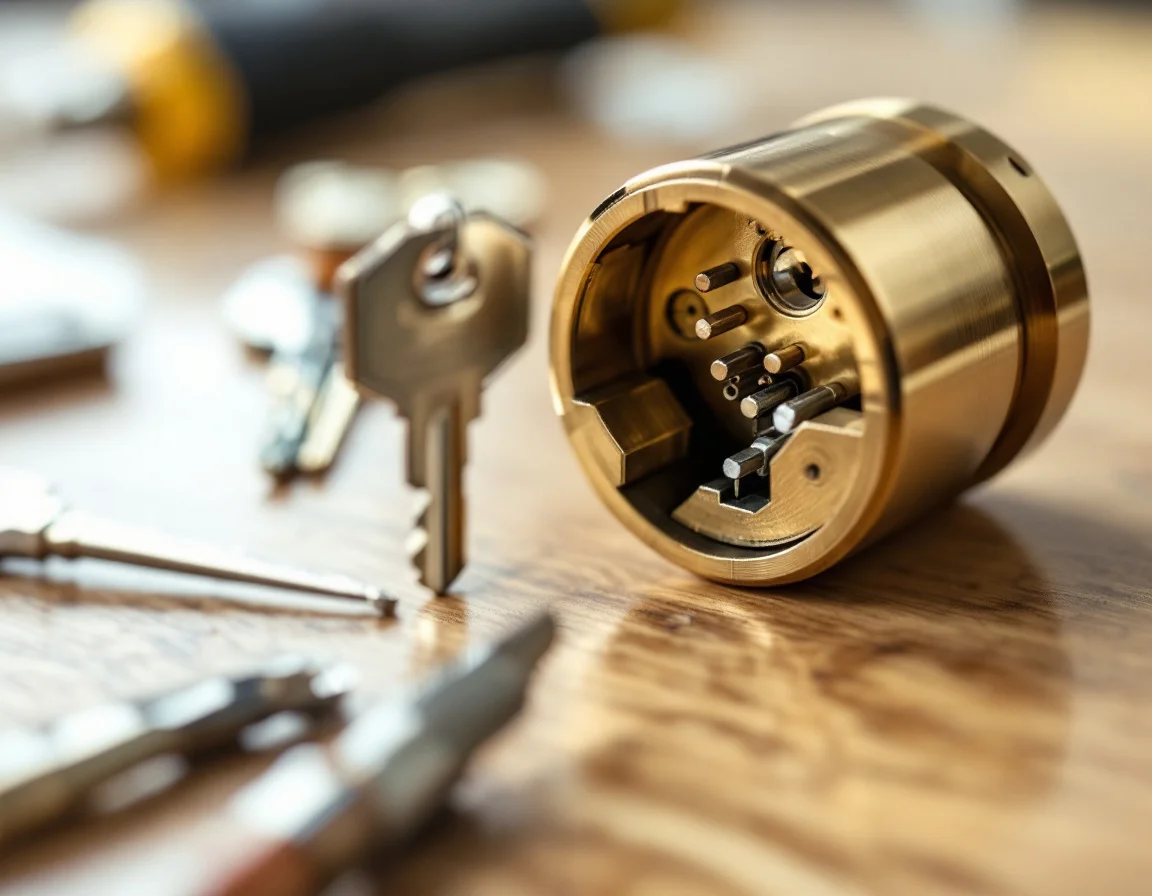
When you move into a new place or lose a key, you have two options: rekey the existing locks or replace them entirely. They solve different problems, and picking the right one saves you money.
What rekeying means
Rekeying changes the internal pins of a lock so it works with a brand-new key — and every old key stops working instantly. You keep your existing hardware; only the key changes. It's fast and budget-friendly, and a locksmith can key several locks alike so one key opens them all.
Rekey when you…
- Just moved into a home and don't know who has old keys.
- Lost a key or had a keychain stolen.
- Had a tenant move out or a roommate leave.
- Want one key for several doors that currently take different keys.
What replacing means
Replacing a lock swaps the whole mechanism for new hardware. It costs more than rekeying, but it's the right call when the lock itself is the problem or you want an upgrade.
Replace when you…
- Have a lock that's worn, sticking or damaged (or damaged in a break-in).
- Want to upgrade security — for example a grade-1 deadbolt or a high-security, restricted-key lock.
- Are switching to a smart lock or keypad.
- Want all your door hardware to match in finish and style.
The short version
If the lock works fine and you only need to control who has a key, rekey. If the lock is worn, damaged, or you want better/newer hardware, replace.
What about cost?
Rekeying is almost always cheaper because you're not buying new hardware — you're paying for labor to reset the pins. Replacing adds the cost of the new lock. If you're on a budget and the locks are in good shape, rekeying gets you the same peace of mind for less. Not sure? Our residential locksmith techs will tell you honestly which one your doors need.
Related services